More AI models
Read more

Railway raises $100M for AI-native cloud infrastructure
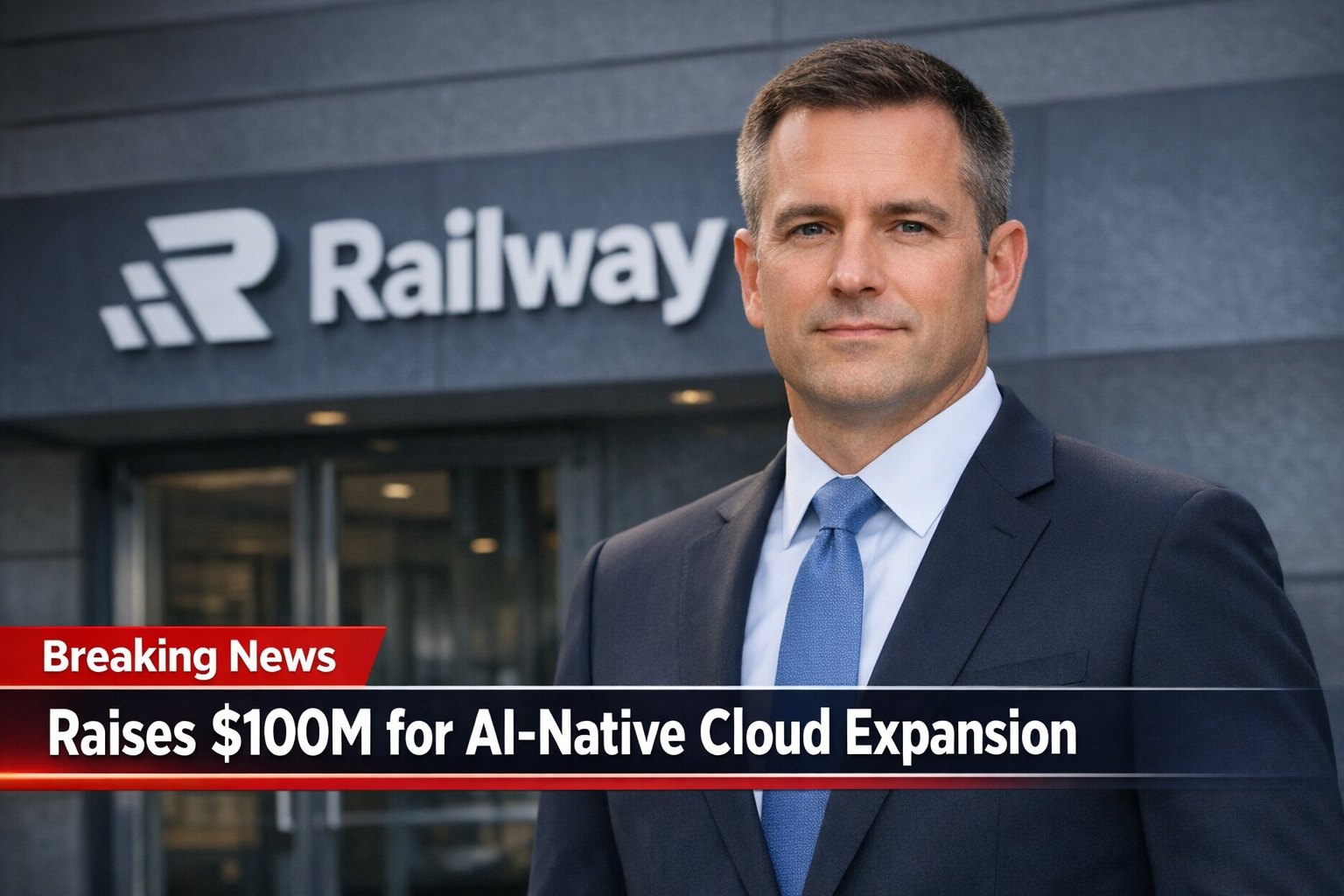

Railway just landed a major vote of confidence. The San Francisco-based cloud platform announced a $100 million Series B as demand for AI applications makes older cloud workflows feel painfully slow and pricey. According to VentureBeat, the round was led by TQ Ventures with FPV Ventures, Redpoint, and Unusual Ventures participating. The headline isn’t just the money - it’s what Railway is betting on: an AI-native cloud infrastructure experience that treats speed (and not paying for idle capacity) as the default.
If you run a business that ships software - or you rely on a vendor that does - this matters because the economics and pace of building products are changing. AI coding assistants can produce working code in seconds. But if it still takes minutes to deploy, test, and iterate, your team’s real bottleneck becomes infrastructure, not engineering talent.
Railway’s story is unusual for infrastructure. The company says it has reached two million developers without spending on marketing, largely through word of mouth. It’s also operating at a scale that feels bigger than its headcount: more than 10 million deployments each month and over one trillion requests served via its edge network.
Financially, the company had raised only $24 million before this Series B (including a $20 million Series A from Redpoint in 2022). Railway’s CEO and founder Jake Cooper framed this new raise as optional - not a rescue. He told VentureBeat the company was “default alive,” and raised to accelerate because the opportunity looks large, not because the business needed cash to make payroll.
The market context is straightforward: developers are frustrated by the cost and complexity of traditional cloud platforms like AWS and Google Cloud, and AI-driven development is amplifying that frustration. Railway is positioning itself as a platform where running apps feels faster, simpler, and cheaper, especially as teams try to keep up with “agentic speed” development cycles.
For a non-technical translation: “deploying” is what happens between “we changed code” and “customers can actually use it.” Deploy cycles include building, provisioning, and rolling out updates. That cycle affects how quickly you can fix bugs, launch features, or respond to customer requests.
Railway’s core argument is that the last era of cloud tooling was built for slower iteration. VentureBeat points to a typical Terraform-based build-and-deploy loop taking two to three minutes. In a world where AI assistants can generate code almost instantly, that kind of wait time compounds quickly. If your team (or your vendor) runs dozens of deploys per day, minutes turn into hours of lost momentum.
Railway claims it can deliver deployments in under one second. The company also reports customer outcomes such as a 10x boost in developer velocity and as much as 65% cost savings compared with legacy clouds.
One concrete example in the article: G2X, a platform serving 100,000 federal contractors, measured deployment speed improvements of 7x and cost reductions of 87% after moving to Railway. Its CTO said their infra spend dropped from $15,000 per month to about $1,000, and that tasks that used to take a week could be done in about a day. He also described spinning up multiple services quickly - six services in two minutes - to test architectures without waiting on slow setup.
Even if your business isn’t building “AI infrastructure,” the dynamic still hits you: faster deploy loops generally mean faster product iteration, fewer firefights, and less time tied up in plumbing work.
Railway is leaning into vertical integration in a way many startups avoid. VentureBeat reports that in 2024 the company stopped using Google Cloud and began building its own data centers. Cooper’s reasoning was about control across the hardware and the network, compute, and storage layers - all to create a more differentiated developer experience and faster build/deploy loops.
This is a high-stakes decision. Running your own data centers is operationally hard and capital intensive. But the upside is real if you can pull it off: control over performance, tighter cost structure, and less dependency on a hyperscaler’s pricing model and outage profile.
Railway says this approach helped it stay online during recent widespread outages that hit major cloud providers. For you, reliability isn’t a “nice to have.” It’s revenue protection. When your app is down, sales stop, support tickets spike, and trust erodes.
The pricing model is also designed to feel fundamentally different from the “pay for provisioned capacity” habit of classic clouds. Railway charges per second for actual compute usage, with sample rates in the article including $0.00000386 per gigabyte-second of memory, $0.00000772 per vCPU-second, and $0.00000006 per gigabyte-second of storage. The company emphasizes that it doesn’t charge for idle virtual machines, which contrasts with the traditional approach where you often pay for capacity even when it isn’t actively doing work.
Cooper’s argument is that hyperscalers may have economies of scale, but if customers are paying for idle capacity, there’s room for a purpose-built provider to undercut pricing through higher density and better utilization. Railway claims its pricing comes in roughly 50% below hyperscalers and three to four times cheaper than newer cloud startups.
This is where the Railway news gets practical for you. If more companies can deploy apps instantly and pay only for what they use, a few things start shifting.
1) Smaller teams can run more software. Railway reports operating with just 30 employees while generating tens of millions in annual revenue. That’s a signal that a lot of “cloud work” is being productized. The article also includes a telling customer quote from Kernel (a YC-backed company providing AI infrastructure to over 1,000 companies), where its CTO contrasted needing six full-time engineers to manage AWS at a previous company versus having six engineers total now, focused on product.
For an owner, that translates into a changed hiring plan. Instead of staffing up for infrastructure overhead, you might keep the team lean and invest in product, customer success, or sales. If you’re outsourcing development, it may also change vendor economics: fewer billable hours spent on setup and maintenance, more on features.
2) “Time to value” becomes the competitive edge. If you can ship improvements daily instead of weekly, you don’t just move faster - you learn faster. That affects churn, upsells, and how quickly you can respond to competitors. Railway is explicitly positioning itself for the AI coding era, where iteration speed is the baseline expectation.
3) Cloud billing pressure increases. Railway’s per-second model and “no idle VM charges” narrative attacks a core part of legacy cloud economics. If buyers start expecting utilization-based billing as standard, traditional providers may face harder negotiations, especially with cost-conscious teams that are already frustrated.
4) The mid-market and enterprise are already sniffing around. Railway claims 31% of Fortune 500 companies use the platform in some form, from small team projects to larger deployments. Named customers in the article include Bilt, GoCo (an Intuit subsidiary), TripAdvisor’s Cruise Critic, and MGM Resorts. That mix matters: it suggests Railway isn’t just a hobbyist tool, even though its growth came largely from grassroots developer adoption.
Tradeoff to keep in mind: faster doesn’t automatically mean simpler for every organization. Any shift in infrastructure can require process changes (how you deploy, monitor, and manage services). Railway’s pitch is that it removes friction, but you should still expect a learning curve any time you change where critical workloads run.
Even if you’re not planning a platform migration, this story is a nudge to revisit your build-to-release pipeline and cut dead time. Here are low-drama automation plays that align with the “deploy instantly” mindset Railway is selling:
If feature requests are stuck in email threads, you’re leaving speed on the table. In HubSpot, create a simple intake pipeline (Request - Approved - In build - Shipped). Use Zapier or Make.com to auto-create tasks, notify your dev channel, and update the requester when the status changes. A realistic outcome is cutting 12-15 hours/week of “did you see this request?” back-and-forth for a small team.
Whether you deploy on Railway, AWS, or something else, the win is consistency. Use a lightweight template in your task tool (even a shared doc works) that covers: what changed, who tested it, and rollback notes. Then automate the boring parts: when a ticket moves to “Ready to deploy,” auto-schedule a 15-minute release review in Calendly and post a reminder to your team. You can often set this up in 1-2 days and feel the impact within 2-3 weeks.
Railway’s “stayed online during major outages” claim is a reminder to tighten your response loop. If your app hiccups, your customers want clarity fast. Create an internal trigger so that when an incident is declared, a draft update email is generated for your support team, and your top customers get proactive outreach. If you run a trades or field service business on apps, you can route urgent issues into ServiceTitan workflows so dispatch and customer notifications stay aligned.
Railway highlights examples like G2X dropping from $15,000/month to about $1,000. You don’t need to match that to learn from it. Set a monthly “cloud bill review” workflow: export costs, categorize top services, and decide one change to test. If you’re exploring alternatives, keep it scoped: start with a single internal service or non-critical workload so you can measure before betting the business.
Railway’s messaging is clear: hyperscalers are optimized for a prior era, and AI-driven development is compressing timelines so aggressively that old deploy loops and idle-capacity billing feel obsolete. If Railway’s under-one-second deploy promise holds up at broader enterprise scale, the pressure on AWS-style complexity and pricing will intensify.
The other big storyline is operational: building data centers is a bold move, and Railway is choosing to compete not just on developer experience but on the fundamentals of running infrastructure. If it keeps reliability high while expanding, it strengthens the case that vertically integrated “AI-native cloud infrastructure” can be a credible alternative, not just a niche.
Either way, you should expect your teams (or vendors) to start asking harder questions about why deploys take minutes, why environments take days to provision, and why you’re paying for resources that sit idle.
Source: VentureBeat
If you want help turning this speed-and-cost shift into a practical automation plan (without ripping out everything at once), we can map your current delivery workflow, identify the biggest bottlenecks, and prioritize 2-3 automations you can launch in the next few weeks.


.png)


