More AI models
Read more

Microsoft AI agents get a sales reality check now
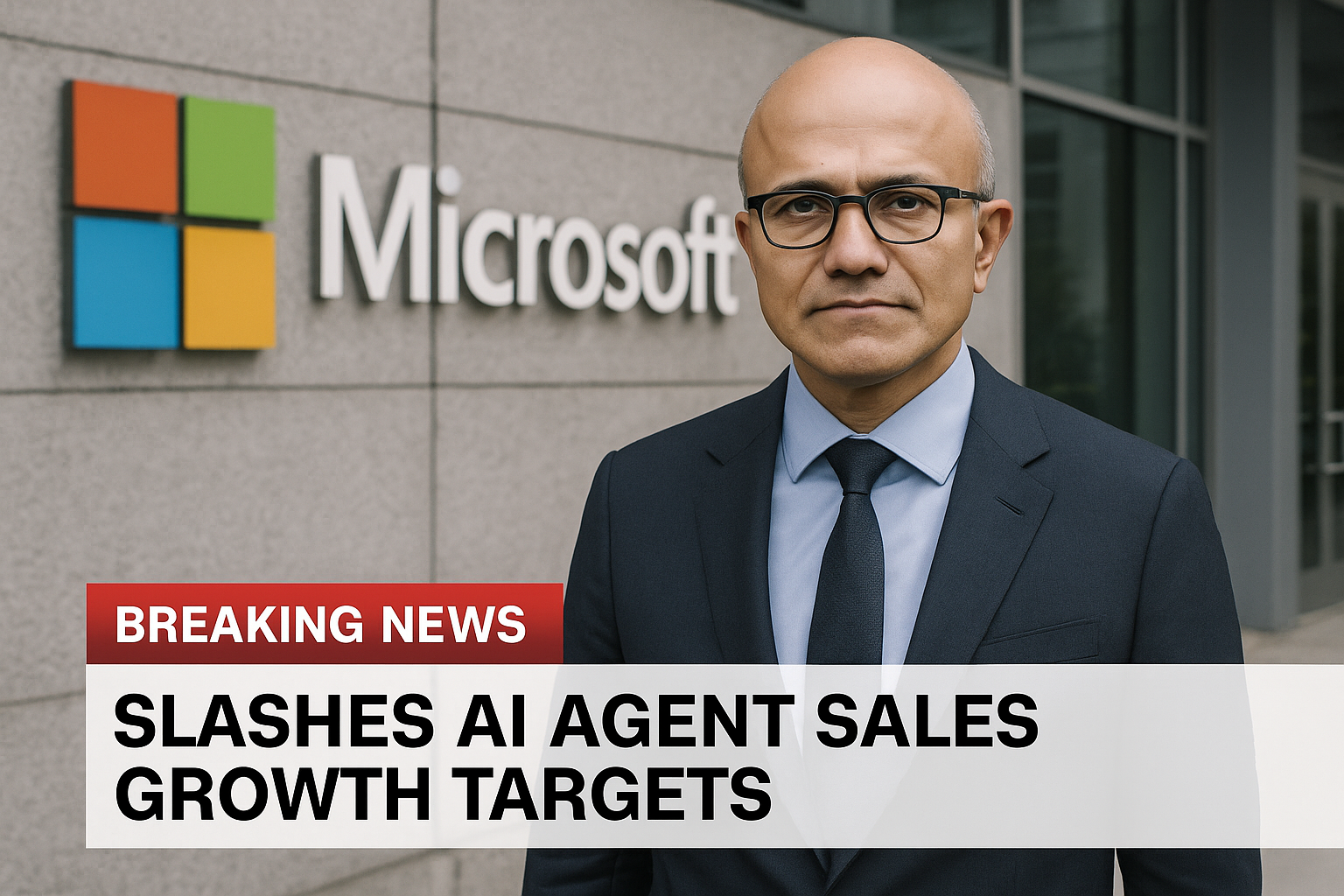

Microsoft has trimmed its sales growth targets for its new AI agent products after many reps missed ambitious quotas for the fiscal year ending in June, according to a report from The Information that’s been covered by Ars Technica. The company has spent 2025 promoting what it calls the era of Microsoft AI agents—autonomous assistants built on large language models that can handle multi-step work instead of just answering single prompts. Cutting those targets roughly in half is a sign that customers aren’t yet buying into that vision at the scale Microsoft expected. If you’re running a growing business and trying to decide how hard to lean into Microsoft AI agents, this is a useful reality check and a chance to rethink your automation roadmap.
Microsoft has been positioning agents as the next big leap beyond basic copilots. Instead of you typing a single prompt and getting a single answer, an AI agent can be configured to string actions together: pull data from a CRM, summarize it, generate a slide deck, email it to a client, and log the interaction—all with minimal human intervention.
At its Build conference in May, Microsoft framed 2025 as the year of agents across its stack. It talked up agents inside Word, Excel, and PowerPoint through Microsoft 365 Copilot, and pushed tools like Azure AI Foundry and Copilot Studio so companies could build their own custom agents. At Ignite, the story continued with more specialized agents promised to automate everything from dashboards to customer reports.
The sales numbers tell a more cautious story. Many enterprise buyers still see fully autonomous agents as unproven. They’re worried about reliability, data governance, and whether an agent can safely take actions in business systems without human review. That hesitation has shown up in missed quotas, forcing Microsoft to pull back its growth expectations for these products—something that doesn’t happen often inside a sales-driven organization.
This shift isn’t a retreat from AI as a whole. Microsoft is still deeply invested in Copilot, Azure AI infrastructure, and partnerships across the ecosystem. The reset is specifically about the most bleeding-edge piece of the story: Microsoft AI agents that promise to autonomously run complex workflows end to end.
Internally, lowering targets is an admission that the market isn’t ready to buy those promises at scale yet. Even large enterprises with big IT teams are moving carefully. They want guardrails, clear ROI, and real-world case studies—not just slick demos where an agent magically runs a business process with no hiccups.
For you, this is actually good news. It means you’re not behind if you haven’t rolled out custom agents on top of your data. It also hints at how Microsoft is likely to respond: by bundling more agent capabilities into tools you already pay for, offering more industry-specific templates, and making it easier to experiment without a huge up-front project.
It also strengthens a trend that was already visible: the value is shifting away from marketing buzz about “autonomous AI” and toward practical, supervised automation. The winners won’t be the companies that deploy the flashiest agents. They’ll be the ones that quietly remove dozens of manual steps from everyday workflows while keeping humans firmly in the loop.
If your business runs on Microsoft 365, Dynamics, or Azure, you’re exactly the audience Microsoft hoped would embrace agents. But the sales reset shows that even global enterprises are still testing the waters. That should take some pressure off you to jump straight into complex agent projects.
Instead, you can focus on “high-probability” automation wins—areas where AI is already stable, useful, and easy to control. Think about the work your team does every week:
These are the kinds of tasks where Microsoft 365 Copilot, Power Automate, and external tools like Zapier or Make.com already shine. You don’t need a free-roaming agent that “runs your sales department.” You need structured workflows that call AI for specific steps, then hand control back to a human.
Picture a 25-person accounting firm. Instead of commissioning a grand “finance agent” that promises to oversee client relationships, that firm is better off automating client onboarding forms, drafting engagement letters, and generating first-draft tax summaries. Microsoft 365 Copilot can handle the drafting; Power Automate or Zapier can route documents for approval and e-signature; tools like HubSpot can log activity back to the CRM. The net result: the firm saves 10–15 hours a week on admin without handing full control to an agent.
Or take a growing e-commerce brand using Shopify and Microsoft 365. A fully autonomous “marketing agent” that runs campaigns sounds exciting but risky. A more realistic win is an AI-enhanced workflow that pulls new product reviews daily, summarizes customer sentiment, drafts updated product descriptions in Word, and creates a task in Asana for a marketer to review and publish. That’s agent-like behavior, but with clear checkpoints.
The danger in Microsoft’s missed targets isn’t that AI suddenly doesn’t matter. The real danger is assuming “if big enterprises are hesitating, this probably won’t impact us” and stepping out of the race entirely. Your competitors are already using AI to shave hours off low-value work. The Microsoft story simply tells you to favor grounded, measurable automation over grand, speculative agent projects.
If you want to benefit from AI while avoiding the bleeding edge, here’s a practical playbook you can start this quarter.
1. List your most painful workflows. Spend an hour with your team and list out processes that eat 10+ hours a week: reporting, client updates, internal status emails, manual data entry, onboarding flows. This is where AI and automation will pay off fastest.
2. Start with copilots, not free-roaming agents. If you have access to Microsoft 365 Copilot, roll it out to a small pilot group in roles like sales, operations, or finance. Focus on a handful of repeatable use cases: proposal drafts, meeting notes, follow-up emails, and Excel analysis. Track how long these tasks took before and after the pilot.
3. Use automation hubs you already understand. Tools like Power Automate, Zapier, and Make.com can link Microsoft 365 with CRMs, help desks, and project tools. Build simple, linear flows: a trigger (new form submission), one or two AI steps (summarize, extract fields, draft response), a human approval, then updates to your systems.
4. Ask tougher questions about any AI agent pitch. When a vendor or Microsoft partner talks about agents, push for specifics:
5. Run a 90-day experiment instead of a multi-year bet. Pick two or three processes and build agent-like workflows around them. For example: an “AI intake assistant” that cleans and routes incoming leads, or a “reporting assistant” that builds a weekly KPI slide deck. Track concrete metrics: emails drafted, reports produced, hours saved, and error rates. At the end of 90 days, decide whether it’s worth deepening your investment in tools like Copilot Studio or Azure AI Foundry.
6. Give someone ownership of automation. Agents and AI workflows cut across departments. Assign an “automation owner” or small committee responsible for standards, approvals, and documentation. That way, you avoid random one-off experiments that no one maintains three months later.
Microsoft’s decision to lower AI agent sales targets is a sign that hype has run a little ahead of reality. Over the next 12–24 months, expect the company to weave more agent-style capabilities quietly into tools you already use, rather than selling everything as a separate, futuristic product.
That likely means Outlook rules that can call AI to triage mail, Excel that can build dashboards from a verbal description of your data, and industry-specific templates for roles like field service, legal, or healthcare where agents operate inside well-defined boundaries. Pricing and packaging may also evolve, with more usage-based options and bundles designed to make experimentation feel safer.
For smaller businesses, the smartest move is to watch for prebuilt solutions in the platforms you rely on—your CRM, booking software, or field service system—that integrate with Microsoft 365 and include AI-powered workflows out of the box. The companies that win this next wave won’t be the ones with the wildest agents; they’ll be the ones with the clearest processes, the cleanest data, and a handful of modest, high-impact automations that actually ship.
If you want the full backstory on Microsoft’s quota reset and how enterprise buyers are reacting, the original report summarized by Ars Technica is a useful companion to your own planning.
Curious how this applies to your business? Book a free consultation with StratusAI and we’ll map out two or three realistic automation wins using the tools you already pay for.


.png)


