More AI models
Read more

Microsoft AI agents stumble as sales targets cut
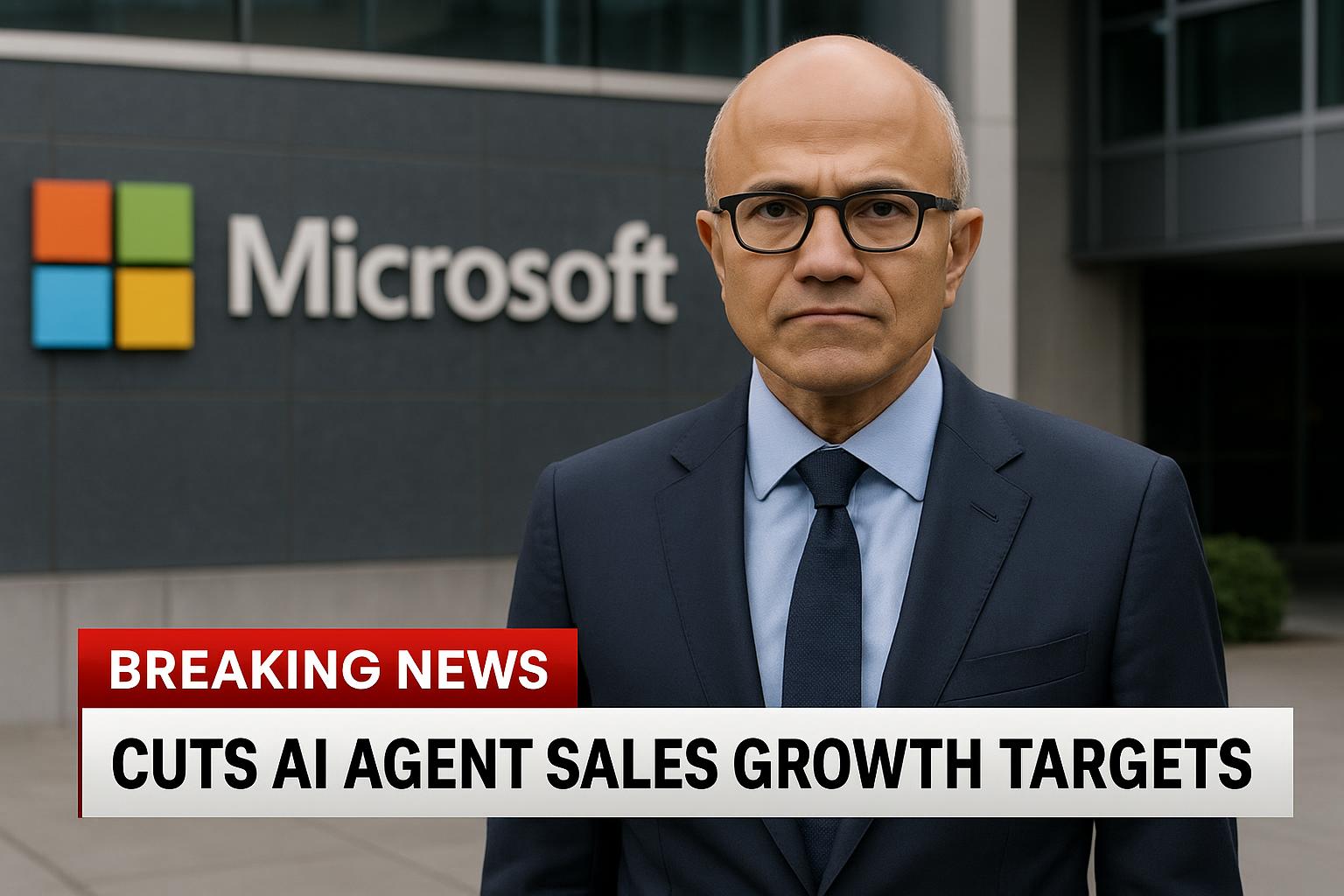

Microsoft has reportedly slashed its internal sales growth targets for its new AI agent products after many sales reps failed to hit quota, according to a report covered by Ars Technica. Only months after declaring the “era of AI agents,” Microsoft is discovering that enterprise buyers aren’t adopting these tools as quickly as expected. If you’ve been wondering whether you’re falling behind by not rolling out Microsoft AI agents across your business, this news should prompt a pause—and a more strategic look at timing and fit.
For small and mid-sized companies, this isn’t just a Microsoft story. It’s an important signal about where autonomous AI automation really is on the maturity curve, what’s working versus what’s still experimental, and how aggressively you should bet on it over the next 12–18 months.
Microsoft has been pushing hard into “agentic” AI—systems that don’t just answer prompts, but can take multistep actions on your behalf. In 2025, that push showed up in several places: specialized agents inside Microsoft 365 Copilot for Word, Excel, and PowerPoint; tools to build custom agents in Azure AI Foundry; and low-code options in Copilot Studio for companies that want to design their own task-specific assistants.
These agents are meant to automate complex workflows like turning raw sales data into dashboards, generating tailored customer reports, or coordinating steps across multiple business tools. The internal bet at Microsoft was clear: customers would quickly shift from simple copilots (that draft content or answer questions) to more autonomous systems that actually get work done end-to-end.
The report highlighted by Ars Technica suggests that reality is more complicated. Many sales teams missed ambitious targets, and Microsoft has now lowered growth expectations for these AI agent offerings. That’s unusual for a company that’s been aggressively pushing AI as its growth engine.
In plain terms: the hype outran real-world adoption. Large customers are experimenting, but they’re not rolling agents out across the business at the pace Microsoft forecasted.
If Microsoft’s biggest enterprise customers are moving cautiously, there are a few likely reasons—and they should sound familiar to any business owner evaluating new automation:
So while Microsoft AI agents are powerful on paper, they’re landing in an environment where many companies still struggle to fully leverage simpler tools like Power Automate, Zapier, or Make.com. Jumping straight from basic automations to autonomous agents is a much bigger leap than marketing suggests.
If you run a small or mid-sized business, Microsoft’s missed AI agent targets actually work in your favor in several ways.
1. You’re probably not behind. A lot of owners worry that larger competitors are miles ahead with AI. The fact that Microsoft’s own expectations were too aggressive shows that even big enterprises are still feeling AI agents out. If you’re experimenting with copilots, basic automations, and selective AI pilots, you’re right where most of the market is.
2. The “must-buy-now” pressure is weaker. When vendors assume wild growth, their sales teams push hard with time-limited offers and fear-of-missing-out messaging. Cutting sales targets usually means reality has caught up. You have more room to negotiate, ask for proof-of-value, and insist on pilots before major commitments.
3. Incremental automation is still the smart play. Today, many businesses are getting more predictable wins from simple building blocks: connecting tools with Zapier or Make.com, embedding AI into their CRM (HubSpot, Salesforce), and using copilots inside tools staff already live in (Outlook, Word, Excel). Those moves can realistically save 8–15 hours per employee per week without introducing a new class of risk.
4. Talent and process matter more than features. Microsoft AI agents don’t remove the need for clear processes. If your sales pipeline, support flows, or invoicing steps aren’t well defined, handing them to an agent just automates confusion. Companies that win with automation first standardize their workflows, then layer tools on top.
5. Vendor risk is real. When a product line misses targets, roadmaps can shift. That doesn’t mean Microsoft will abandon agents—it won’t—but it may change pricing, bundles, or prioritization. You don’t want your core operations to depend on a feature that’s still searching for product–market fit.
The headline here: treat Microsoft AI agents as promising but early-stage. The good news is you can still capture serious automation value without betting your business on features the market hasn’t fully validated.
This isn’t a signal to ignore Microsoft AI agents altogether. It’s a signal to use them deliberately. Here’s a practical roadmap for the next 6–12 months.
Identify 3–5 workflows that:
Examples:
Use Microsoft 365 Copilot and, where available, AI agents to handle the first 60–70% of the work, but keep a human final review step. Track how much time that actually saves over 2–4 weeks.
For cross-app workflows—like moving leads from your website form into HubSpot, sending them a Calendly link, and notifying your team in Slack—you’ll likely get faster, more stable results from established tools:
These systems are deterministic and easier to test, which makes them ideal for core operational steps where mistakes are expensive.
Rather than reacting to every Microsoft keynote, define a simple roadmap:
This keeps you moving forward without overcommitting to unproven tech.
Before investing heavily in Microsoft AI agents (or any similar tech):
Microsoft cutting AI agent sales targets doesn’t mean agents are going away. It means the adoption curve will be slower and more grounded than the marketing narrative suggested. Expect Microsoft to respond by:
For your business, the smartest move is to treat 2025–2026 as an aggressive learning period, not an all-in commitment phase. Keep building your automation muscle with reliable tools while selectively experimenting with Microsoft AI agents where the upside is real and the downside is limited.
The original report summarized by Ars Technica is a reminder: even the biggest AI vendors are still figuring this out. You’re not late—but you do need a plan.
Want to stay ahead of automation trends? StratusAI keeps your business on the cutting edge. Learn more →


.png)


