More AI models
Read more

Anthropic Claude Code crackdown reshapes AI coding pricing
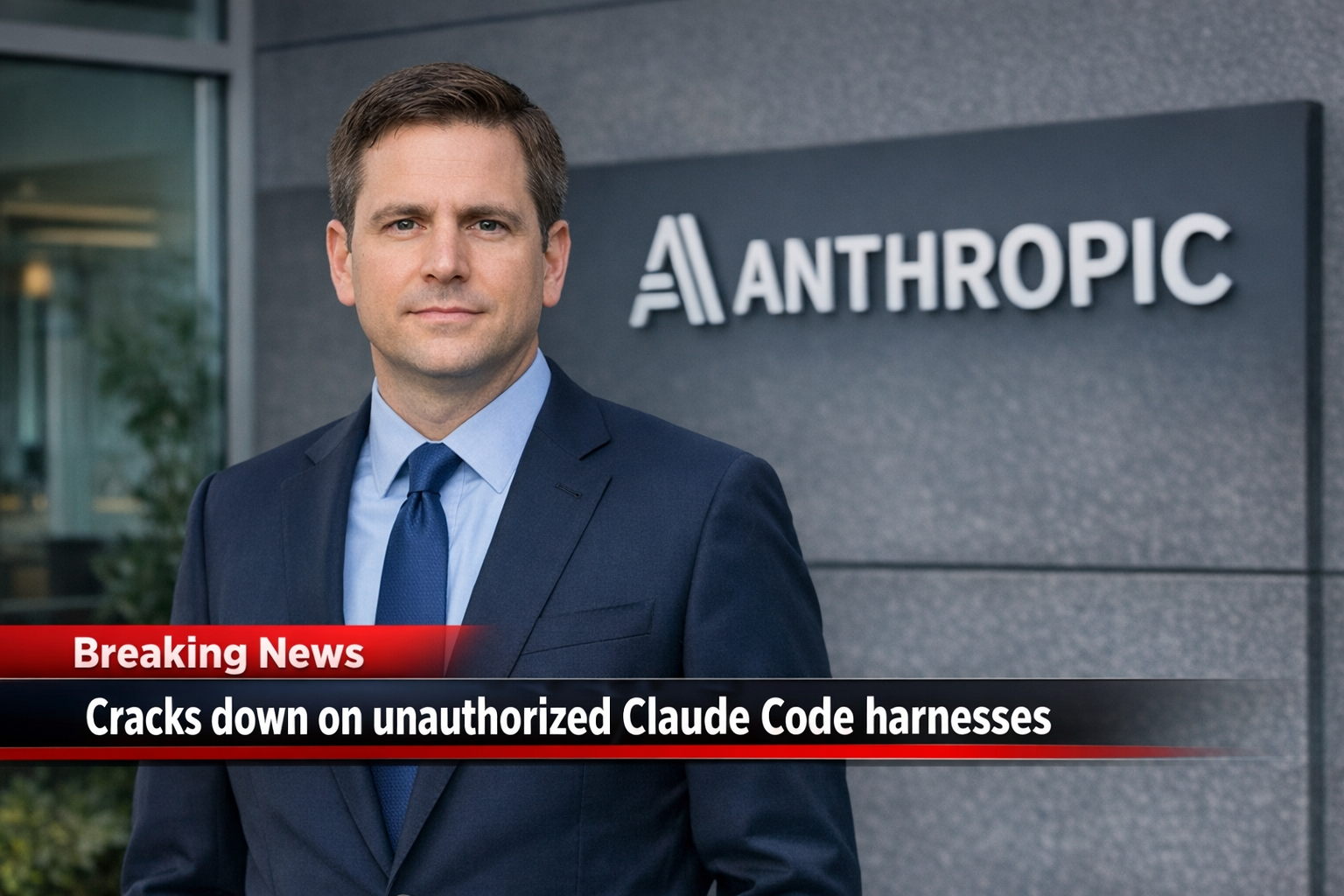

Anthropic just made a big, workflow-breaking change: it has rolled out stricter technical safeguards to stop third-party apps from pretending to be its official coding client, Claude Code, to get better pricing and limits. According to VentureBeat, the move disrupted users of the open source coding agent OpenCode and also coincided with separate access restrictions affecting rival lab xAI through the Cursor IDE. If you or your team relies on agentic coding loops, this matters because the economics and the reliability story just changed overnight.
The core issue is spoofing. Some third-party tools were sending request headers that made Anthropic's servers believe the traffic was coming from the official Claude Code CLI. That let automated tools run on top of consumer plans (like Claude Pro/Max) that were designed for humans chatting, not for nonstop automation.
Anthropic staffer Thariq Shihipar (Member of Technical Staff, working on Claude Code) publicly said the company has tightened safeguards against spoofing the Claude Code harness. He also said the rollout created collateral damage: some accounts were automatically banned after triggering abuse filters, and Anthropic is reversing those mistaken bans. Even with that reversal, the practical outcome is clear: the third-party integrations themselves were intentionally blocked.
These third-party products are often described as "harnesses" or wrappers. They use OAuth to operate a user's web Claude subscription from inside other environments, then drive automated workflows. For businesses, the big takeaway is that Anthropic is separating (and enforcing) two worlds:
Anthropic's stated motivation is stability and diagnosability. In Shihipar's framing, unauthorized harnesses can introduce weird failure modes, bugs, and request patterns that Anthropic can't reliably debug. Then, when something breaks inside a third-party wrapper like OpenCode (or Cursor in certain configurations), users may blame Claude itself. That hurts trust, especially as Claude Code is rising fast in popularity.
But the community reaction highlighted a second force: economics. On Hacker News, users compared it to an all-you-can-eat buffet. Anthropic sells a flat-rate consumer plan, but its official Claude Code tool effectively controls consumption speed. If a third-party harness removes the speed limit and runs autonomous loops (coding, testing, fixing) for hours, the token burn can exceed what the subscription price can reasonably cover.
One user summarized the gap bluntly: in a month of Claude Code usage, a heavy user could consume enough tokens that it would have cost more than $1,000 on a metered API plan. Whether or not you agree with the analogy, it helps explain why Anthropic is pushing high-volume automation back to the two paths it can govern financially: the API and the official tooling.
If you're a non-technical business owner, here are the practical ripple effects you should expect.
Teams that quietly used Claude Pro/Max as the cheapest way to run agentic coding loops are now facing a hard choice: move to the commercial API (metered, predictable per-token billing) or constrain work to Claude Code where Anthropic can enforce limits. That can expand your monthly AI spend quickly if your workflows are truly high-volume.
Crucially, this isn't only a developer issue. If your product roadmap depends on overnight agents fixing bugs, generating tests, and iterating nonstop, you were effectively building a production process on top of a consumer subscription loophole. Anthropic just signaled that this is not a stable foundation.
The article calls out the enterprise lesson: unauthorized wrappers may look like cost savings, but they can vanish without warning. If your team built internal processes around a harness and it gets blocked (or trips an abuse filter), you can lose access at the account level and stall delivery.
That means you need governance, even if you're a 10-person company. Not paperwork for its own sake, but a clear answer to: "Which AI access paths are approved for automation?"
OpenCode's team immediately launched OpenCode Black, described as a new $200/month premium tier that routes through an enterprise API gateway to bypass consumer OAuth limits. That tells you everything about where this is going: third-party tools will either (a) become official API customers, (b) push you into bring-your-own-key setups, or (c) switch you to other providers.
OpenCode's creator also said they'd work with OpenAI so users can benefit from OpenAI subscriptions directly inside OpenCode. If your team uses an IDE-based agent today, expect more provider switching, more configuration, and more "which model are we using right now?" complexity.
Separately from the harness enforcement, the article reports that developers at xAI lost access to Anthropic's Claude models after using them via Cursor. An internal memo quoted in the piece says Cursor characterized it as a policy Anthropic is enforcing for major competitors. Anthropic's commercial terms prohibit using the service to build competing products or train competing AI systems, and Cursor was the access path that enabled the violation.
For you, the lesson isn't "don't compete with Anthropic." It's simpler: if you buy AI through an intermediary tool (an IDE, wrapper, or platform), you still carry compliance risk. Your vendor's integration doesn't override the model provider's terms.
This is the moment to redesign your automation so it survives policy shifts.
Opportunity 1: Make your "agent loops" intentional and metered. If you've been running endless fix-test-fix cycles, put guardrails around them: limit runs, define stopping conditions, and log token usage or request volume so you can correlate AI spend to deliverables. Even if you stay in Claude Code, you'll want internal visibility because Anthropic is clearly prioritizing controlled usage.
Opportunity 2: Split workflows by sensitivity and volume. Use human-in-the-loop chat for customer-specific reasoning and high-stakes decisions, and reserve heavy automation for the sanctioned path you can budget for (likely the API). This reduces the chance that one "creative" setup trips abuse filters and locks out your whole team.
Opportunity 3: Build provider-agnostic automation around business systems. Instead of tying everything to a single harness inside an IDE, anchor automation in tools you already run the business on. For example, you can use Zapier or Make.com to route requests, log outputs, and trigger approvals. Then store outcomes in HubSpot (sales notes, deal updates) or create follow-ups through Calendly when human review is needed. If you're in field services, you can treat your operational system (like ServiceTitan) as the system of record, and only use AI as a controlled assistant that drafts, summarizes, or checks work before it becomes official.
The point isn't that these tools magically replace a coding agent. It's that they help you operationalize AI so you can swap models or access methods without rewriting your whole company workflow.
If you're currently using Claude through a third-party coding agent or wrapper, here's a practical plan.
Ask your team three questions:
This is about defining your blast radius. If a safeguard update blocks a path, you need to know what stops working.
Based on the article, Anthropic is steering automation toward the commercial API or the official Claude Code environment. Decide which one matches your risk tolerance:
If your team was counting on flat-rate plans to cover high-volume loops, assume your costs will change and plan for it upfront rather than reacting mid-sprint.
You don't need a committee. You need a checklist and a dashboard:
If you're already using Zapier or Make.com, you can route AI requests through a single automation "hub" so you get consistent logging and can shut off risky workflows fast. Expect some learning curve, but you can usually get a first working version in 2-3 weeks if you keep scope tight.
The article frames this as ecosystem consolidation. Claude Code surged in late 2025 and early 2026, helped by community techniques like the "Ralph Wiggum" self-healing loop. That popularity also made the arbitrage obvious: powerful Claude models (including Claude Opus) running at massive scale on a flat subscription fee.
Anthropic is drawing a firm boundary: if usage threatens stability, cost structure, or competitive position, it will respond with technical enforcement and policy-based cutoffs. The precedent cited includes revoking OpenAI's Claude API access in August 2025 and a sudden Windsurf capacity cutoff in June 2025 that pushed a quick shift to BYOK. If your business depends on AI, "will this access method still exist next month?" is now a legitimate planning question.
Source: VentureBeat
Want to stay ahead of automation trends? StratusAI keeps your business on the cutting edge. If you're unsure whether your team is using a harness, a sanctioned API path, or an IDE integration that could be cut off, we'll help you map it and redesign it so it survives the next policy shift.


.png)


